Decoding Seasonal Fluctuations in Blackjack Traffic at Destination Casinos and Their Effects on Game Dynamics

Destination casinos see clear shifts in blackjack traffic that follow predictable seasonal cycles, and those changes reshape table availability, minimum bets, and overall game flow in measurable ways. Observers note that summer months bring surges in visitor numbers to major resort properties, while shoulder periods create quieter stretches that alter how games progress from one hand to the next. Data compiled by regional gaming authorities shows these patterns repeat annually across properties in Nevada and other key markets, creating consistent adjustments in operational decisions.
Tracking Annual Traffic Patterns
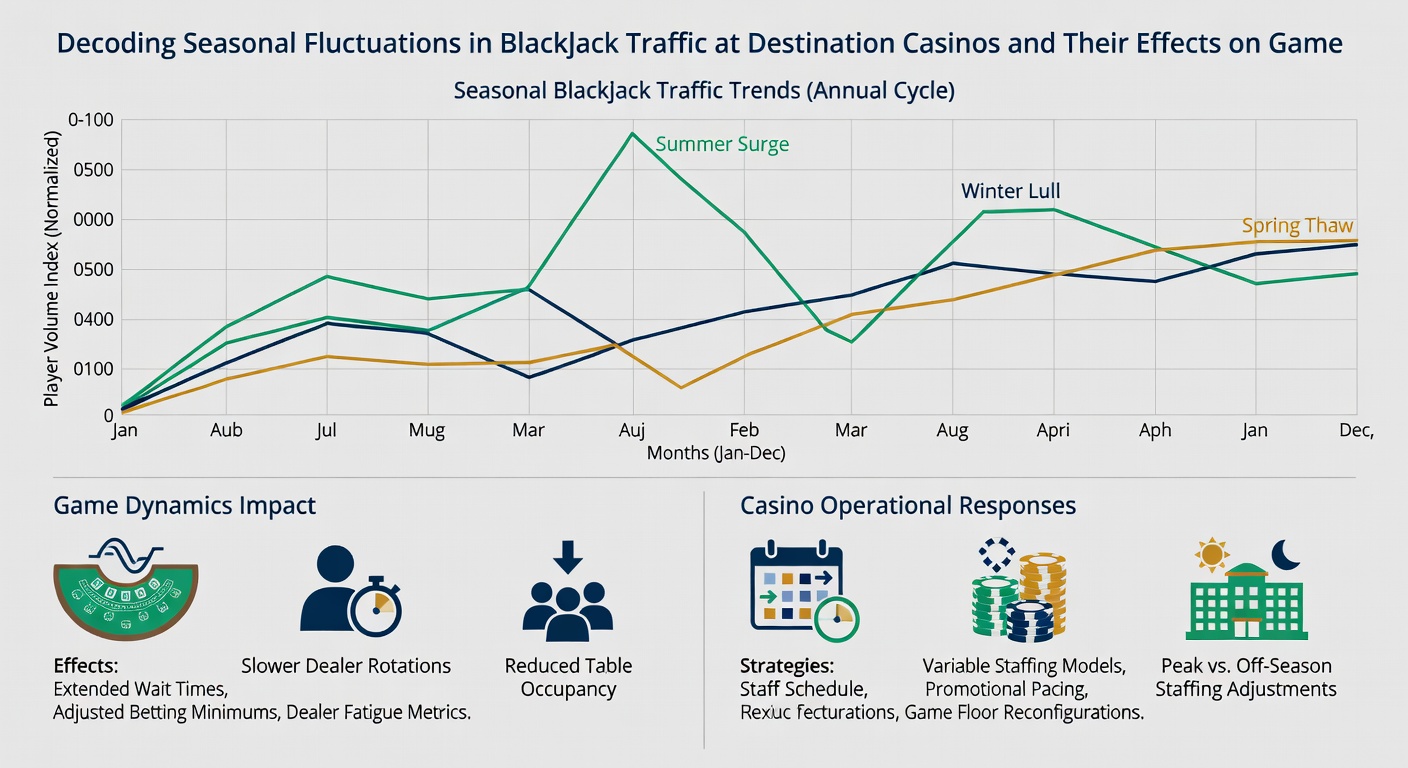
Peak seasons align with holidays and school breaks, when families and leisure travelers converge on destination properties and fill blackjack pits for extended sessions. Winter months in northern markets often show declines in local play, yet southern resorts experience the opposite trend as visitors escape colder climates. Figures from the Nevada Gaming Control Board reveal that table games, including blackjack, post higher drop totals during December through February at Las Vegas Strip properties compared with September and October periods.
Those who monitor player counts report that midweek traffic stays lower even during busy months, whereas weekends compound the seasonal effect and push minimums upward at many tables. Spring shoulder seasons, including May 2026 projections from industry analysts, typically show moderate increases as conventions and early vacationers return without reaching summer highs. Such timing allows casinos to maintain more standard table spreads while still adjusting staffing levels to match observed demand.
Operational Adjustments and Rule Variations
Casino managers respond to heavier traffic by raising table minimums and reducing the number of low-limit options, moves that steer recreational players toward higher-stakes action or side games. During lighter periods, properties often lower minimums and add tables to attract steady play, which in turn speeds up hand rates because dealers face fewer interruptions from crowded conditions. Research from university hospitality programs indicates that these rule tweaks occur more frequently at destination resorts than at locals-oriented venues because the customer base shifts dramatically with tourism cycles.
Game dynamics change when traffic rises because players encounter more crowded tables that slow pace and increase average decision time per hand. Conversely, sparse periods let experienced participants find seats faster and maintain steadier betting rhythms without constant table changes. Industry reports highlight that shoe rotation and shuffle frequency sometimes increase during peak months to accommodate higher volumes, although core rules on splits, doubles, and insurance remain fixed regardless of season.
Effects on Player Behavior and Strategy Execution
Busy seasons bring larger crowds of casual participants who tend to follow basic strategy less consistently, which lengthens rounds and creates more variable outcomes at individual tables. Those who study these environments observe that quieter months attract a higher proportion of regular players who execute decisions with greater precision and shorter deliberation times. Data collected across multiple properties demonstrates that average hands per hour can differ by fifteen to twenty percent between peak and off-peak periods at the same casino.
Betting patterns also shift with traffic levels, as higher minimums during busy times discourage small wagers and compress the range of bet sizes in play. Players who prefer counting or advanced tracking find fewer opportunities to observe multiple decks in low-traffic windows, while crowded conditions introduce more frequent deck changes that reset counting sequences. Reports from gaming research centers note that these environmental factors influence session length more than raw mathematical odds, since core probabilities stay constant even as the surrounding conditions evolve.
Regional Variations and Broader Industry Data
Properties in Atlantic City display similar seasonal swings tied to East Coast weather patterns, with summer weekends driving the strongest blackjack volume and winter weekdays showing the steepest drops. Australian casino reports indicate parallel trends during their opposite seasons, where summer holidays boost traffic at coastal resorts and affect table dynamics in comparable fashion. Observers point out that integrated resort destinations combine hotel occupancy data with table game metrics to predict staffing needs weeks ahead, allowing smoother transitions between high and low periods.
Conventions and special events create short-term spikes that overlay the broader seasonal cycle, temporarily increasing minimum bets and altering table density even in otherwise moderate months. Gaming associations track these combined effects through aggregated drop and win figures that reveal how destination casinos balance revenue goals against player experience across different times of year. Such monitoring helps properties maintain consistent game integrity while responding to documented fluctuations in attendance.
Conclusion
Seasonal traffic changes at destination casinos produce measurable impacts on blackjack operations, from table minimum adjustments to variations in hand speed and player composition. Data from regulatory bodies and academic studies confirm that these patterns repeat reliably, giving operators clear signals for staffing and rule-setting decisions. Players encounter different environments depending on when they visit, yet the underlying game mathematics remain unchanged regardless of crowd levels or time of year. Continued collection of occupancy and table game statistics will keep these relationships visible for future planning across major markets.