Blackjack Surrender Mechanics and Their Influence on Decisions Across Regulated Markets
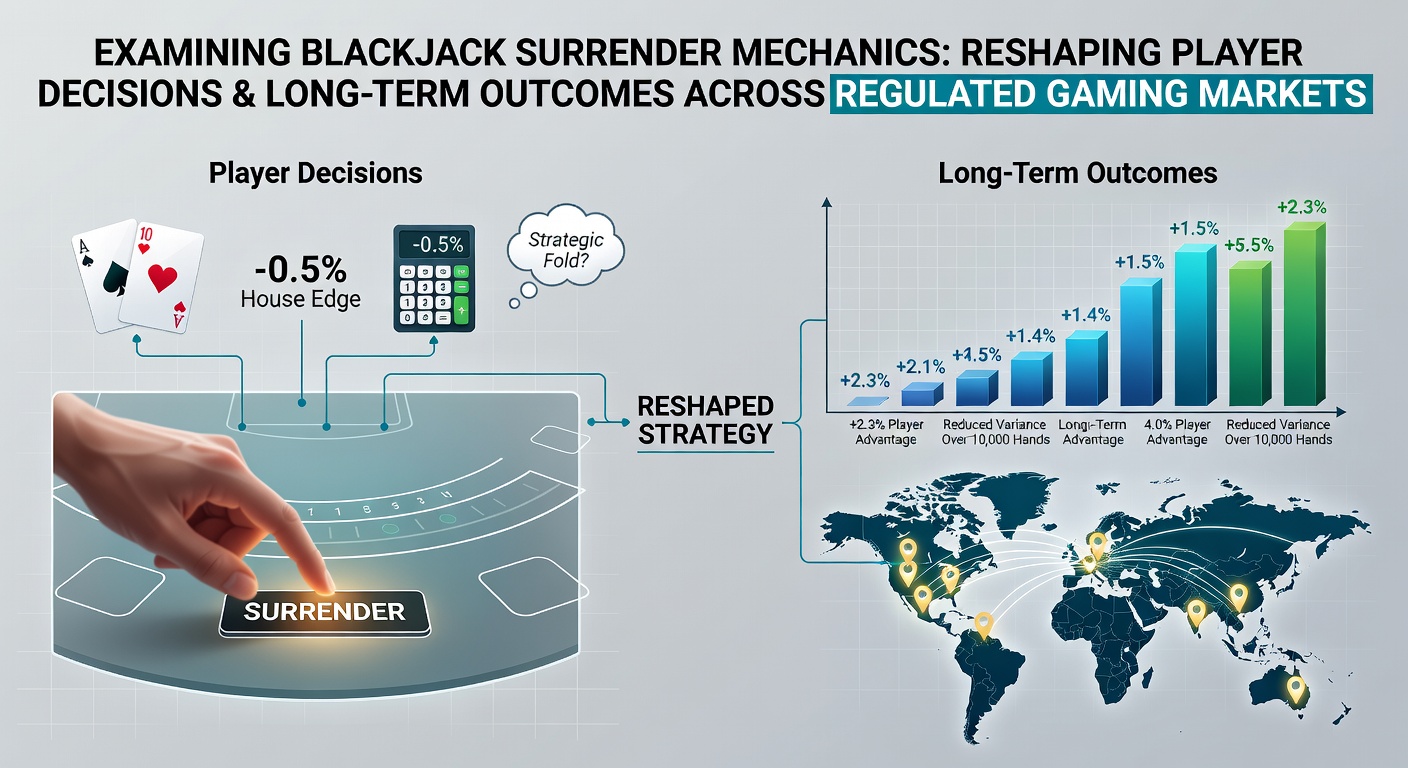
Blackjack surrender options let players forfeit a hand mid-round and recover half their original bet, which alters risk calculations when facing stiff totals against strong dealer cards, and this rule appears in varying forms across different jurisdictions that license table games.
Core Differences Between Early and Late Surrender
Early surrender permits players to give up before the dealer checks for blackjack, while late surrender requires waiting until after the dealer reveals a ten or ace and confirms no natural, which changes the frequency of available opportunities and the expected value calculations that follow each path. Observers note that late surrender dominates in most American markets today because it protects casino revenue streams more effectively than the early version, yet several international venues still list both variants in their approved rule sets.
Dealers follow strict procedures when surrender buttons activate on electronic tables or when verbal requests occur at live pits, and these procedures tie directly into payout verification systems that gaming regulators audit regularly to maintain transparency.
How Surrender Alters In-Game Choices
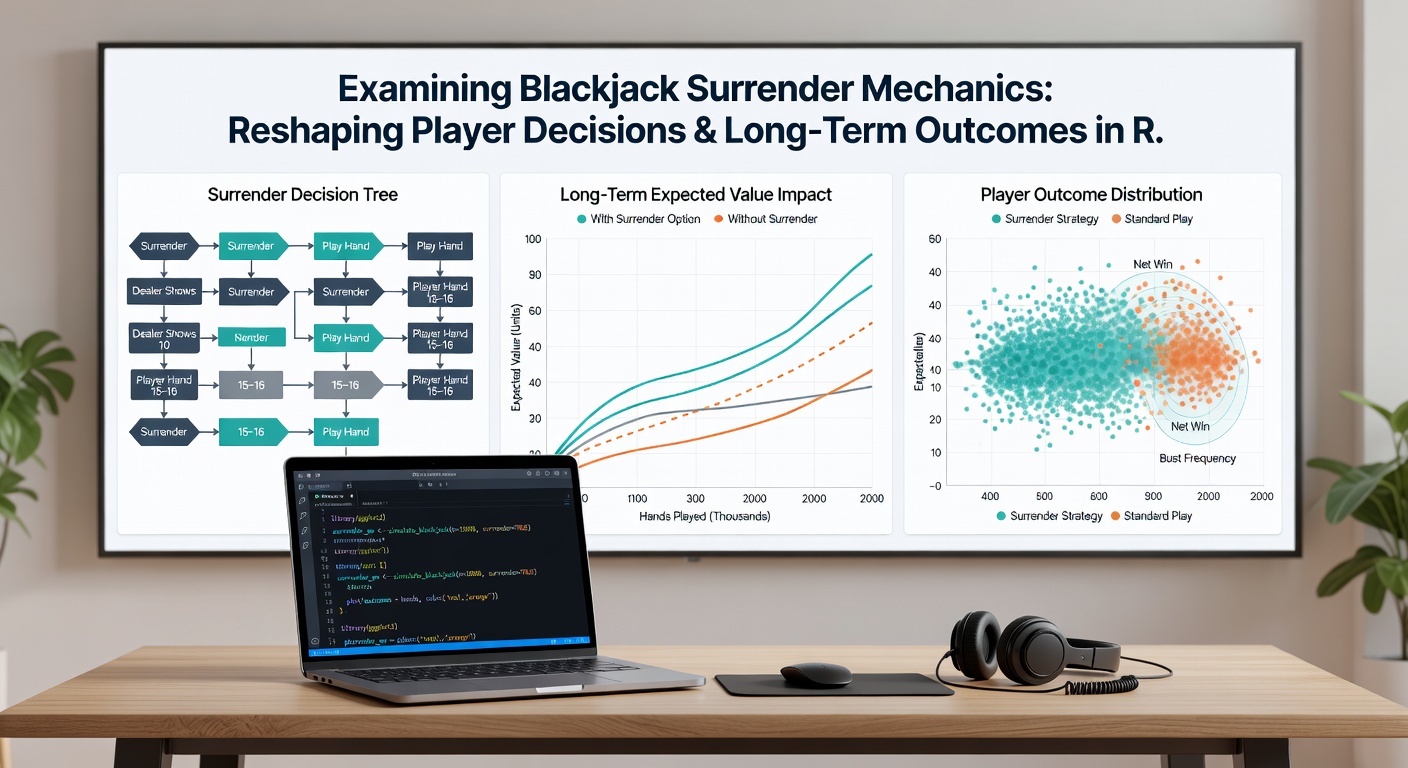
Players holding totals of fifteen or sixteen against a dealer ten now weigh the mathematical edge of surrendering instead of hitting or standing, and strategy charts adjust accordingly to reflect the lower long-run loss rate that surrender delivers in those exact matchups. Data from multiple casino databases shows that surrender usage rises noticeably when tables advertise the option clearly, which in turn reduces the number of completed hands that reach bust totals and affects pace of play metrics tracked by floor supervisors.
Multi-hand scenarios introduce further layers because splitting pairs can create new opportunities where one or both resulting hands qualify for surrender later in the round, and trained observers track these sequences to measure how often optimal decisions diverge from basic strategy without surrender.
Long-Term Outcome Shifts in Player Results
House edge calculations drop by roughly 0.08 percent when late surrender enters the ruleset, and this modest improvement compounds over thousands of hands, which researchers connect to measurable changes in session duration and total amount wagered per visit in licensed properties. Variance decreases slightly as well because players avoid chasing full losses on hands that statistically lose more than seventy percent of the time, leading to steadier bankroll trajectories documented in player tracking systems.
Regulators in several markets require casinos to publish rule sheets that list surrender availability, and these disclosures help analysts compare outcomes between properties that offer the option versus those that withhold it, revealing consistent patterns in average bet size and game speed.
Market Variations Across Jurisdictions
Nevada properties list late surrender on most six-deck and eight-deck shoes while some single-deck games omit it entirely, creating regional differences that Nevada Gaming Control Board reports capture through monthly statistical filings. European venues often combine surrender with other rules such as no-hole-card procedures, and these combinations produce distinct strategy adjustments that appear in local compliance documents.
Markets preparing for expanded table game approvals in 2026 continue to evaluate surrender as part of broader rule packages, and May 2026 brings scheduled reviews in several emerging American jurisdictions where new licenses could standardize late surrender across additional properties. Canadian provinces that license blackjack maintain their own surrender guidelines, which differ from both U.S. and European models and affect cross-border player expectations when travel resumes.
Regulatory Oversight and Data Tracking
Gaming commissions collect hand-level data from automated dealing shoes and table management systems, allowing analysts to quantify how often surrender occurs and whether its presence correlates with shifts in player retention numbers. These figures feed into annual reports that compare surrender-equipped games against traditional versions, highlighting small but persistent differences in hold percentages that operators monitor closely.
Training programs for dealers and floor staff now include surrender scenarios so that disputes resolve quickly and consistently, which supports the stable environment regulators require before granting or renewing operating certificates.
Conclusion
Surrender mechanics integrate into blackjack rulesets in ways that modify immediate choices and produce measurable effects on extended play results, with differences emerging clearly when comparing licensed markets around the world. Continued data collection through established regulatory channels will keep these patterns visible as new jurisdictions finalize their table game standards in coming years.